

Bivio - Vicosporano













Partner
Hier könnte das Logo Ihres Unternehmens zu sehen sein
Info dazuOutdooractive-App


Navigation

Ascent to the Septimer Pass
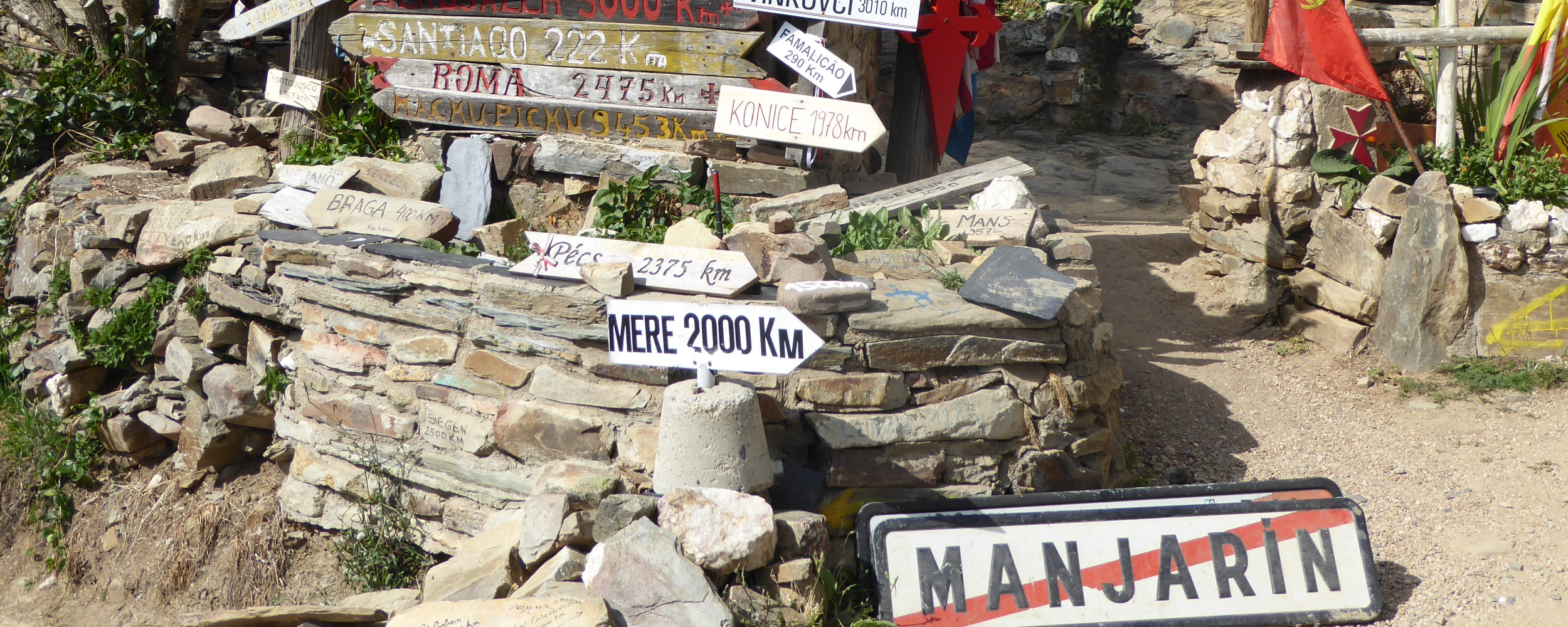
From the watershed, three rivers flow into three seas: the Inn (via Danube) into the Black Sea, the Mera (via Po) into the Adriatic Sea, and the Julia (via Rhine) into the North Sea. From the Septimer Pass, two more passes can be crossed: to the west, the Forcellina (2672 m) into the Avers Valley, to the east the Lunghin Pass (2645 m) into the Upper Engadin.

Kolumban plaque at the Septimer Pass summit
Since Roman times, the Septimer Pass formed one of the most important transit axes. Its location and favorable terrain posed no major obstacles for the track builders.
From Casaccia, there are two hiking options: the Via Sett hiking trail or alternatively the panoramic route (marked on the map up to Vicosoprano), which runs along the mountainside towards Solio and Castasegna.
Anmerkungen
On our hike over the Septimer Pass, we reach its highest point at 2310 m above sea level, which is also the highest point of the entire European Columbanus Way and a triple watershed.
Tipp des Autors
Those who can or want to take some time, can climb from Bivio to the Columbanus Lake and from there to the Septimer Pass.
Orte entlang des Weges
We leave Bivio and follow the signposts to the Septimer Pass or the Via Sett (No. 64). Walking over beautiful alpine pastures, we enjoy magnificent views of the surrounding mountains. At the village exit of Bivio, a hiking sign points to the Leg Columban (Columbanus Lake), a sign that Columbanus and his companions most likely took this path.
On a gently ascending path, we overcome the altitude difference of nearly 550 m up to the pass height at 2310 m above sea level.
Excavations directly above the pass trail revealed a still clearly recognizable Roman military camp from the time of Emperor Augustus. It is assumed that the camp was established in preparation for the Alpine campaign of 15 BC and was then occupied during the summer months. The soldiers' task was to secure and maintain the Septimer Pass as an important supply route for the Roman army operating north of the Alps. In 16/17 AD, the conquest of Germania on the right bank of the Rhine was abandoned and the Rhine was accepted as the border, which rendered the military camp on the Septimer Pass superfluous.
The possession and customs revenues of the entire Septimer route from Chur to Chiavenna formed the power base of the Bishop of Chur from 960. Over the pass – during the High Middle Ages, alongside the Great St. Bernard and Brenner, the most important alpine crossing – traders and armies, kings and emperors, Otto the Great and Frederick Barbarossa, passed through.
From 1938, the Swiss Army built the Septimer defense position just south of the pass height. It consisted of four machine gun positions housed in caverns. The defense position was intended to prevent infantry units from the Bergell valley advancing northwards and thus bypassing the Julier and Maloja defense positions. It was abandoned in the 1990s.
The descent from the Septimer Pass leads down into the Bergell valley in several steep switchbacks along Roman roads. Some segments run directly on the Roman road into the valley.
Casaccia, at 1450 m above sea level, was first mentioned in 1160. Due to its location at the junction of the Maloja and Septimer passes, Casaccia was an important transit station until the 19th century. This function is recalled by the ruins of the medieval Turraccia tower above the village. The former hospice stood near the ruins of the former pilgrimage church of San Gaudenzio above the village on the pass road. It is first documented in 1336 but is likely much older.
Since on the panoramic trail at Pungel we descend around 200 vertical meters to Vicosoprano, the overnight stop, and need to climb almost as many meters again the next day, this path is somewhat strenuous, but the hiker is richly rewarded by a magnificent landscape with views of imposing mountain massifs.
Near the church of S. Cassian in Vicosoprano, a Roman Mercury altar dating from the second half of the 4th century was found. Until 960, the inhabitants of the village were subordinated to Como, then to the Bishop of Chur. Vicosoprano was then the main village of the Bergell valley community, transport center, seat of the Bergell Port, and important families Castelmur and Prevost. The bailiff of the Bishop of Chur held court in the Senwelenturm (including the gallows), the only preserved medieval round tower in Graubünden, which dates from the 13th century, was first mentioned in 1314, and also served as the episcopal road toll station.